Trail facts
Route description
Bannerman Pass was named after former British Prime Minister Sir Henry Campbell-Bannerman. It is said that, when viewed from the right angle, the cliffs just south of the pass resemble the profile of his face. Personally I have never been able to see it, but nonetheless, that's the origin.
Risks: the pass can become icy after snowfall. Rockfall is also a hazard. Assess snow, ice and rock conditions before committing to the route.
GPS track
| Track length: | 12.37 km |
| Total ascent: | 1466 m |
| Total descent: | 124 m |
Directions
After paying for your permits at the Ezemvelo offices, and signing the mountain register, head back up the road to the picnic site. If you see a sign warning you that crows might eat your windscreen wipers, you are in the right place!
The trail starts off on concrete, as it steeply zig-zags down towards the Bushman's River. The river is crossed by a wooden bridge. Take the left split just after the bridge, it is signposted in case you aren't sure. This section of the trail is roughly 6km long, climbing up three sections of ridge before leveling out at an altitude of around 2200m.
At the junction on the contour path, turn right. This too is signposted. There is a large tarn at this junction, which can be useful for cooling off in summer.

The tarn, Bannerman Pass is visible in the distance

Junction of Bannerman Ridge and the contour path

Bannerman Pass and Gypaetus Point as seen from the contour path
The path will continue to Bannerman Hut. This hut sleeps 8 and can be booked online or at the Ezemvelo offices. Confirm current hut charges and which hiking permits are included with Ezemvelo when booking. Do not rely on the old quoted rate or assume that no additional permit is required.

The hut is very rustic, offering little more than shelter from the elements. The beds are masonite, so you will need a mattress. There are no facilities, with water being collected from the nearby river.
Collect drinking water away from obvious contamination and treat it before use. Being upstream of the hut does not guarantee that it is safe. Follow the CDC’s hiking-water guidance and the instructions for your treatment method.
The pass starts from the hut. Initially there is a trail, but the trail soon fades away. The gully forms the line of ascent, but the upper section has no clear path or sharply defined finish. Beyond it the ground continues to rise; flatter ground lies to the north. Plan the exit from the gully carefully, especially in mist. In summer, waterfalls can form above the pass and heavy runoff can flow through the gully. Treat high water as a reason to reassess the route.

Looking up the pass from the turnoff for Spare Rib Cave

Heading up the pass early in the morning

Bannerman Falls - generally only visible in summer

Bannerman Pass as seen from the top. Popple is visible on the right in the distance.
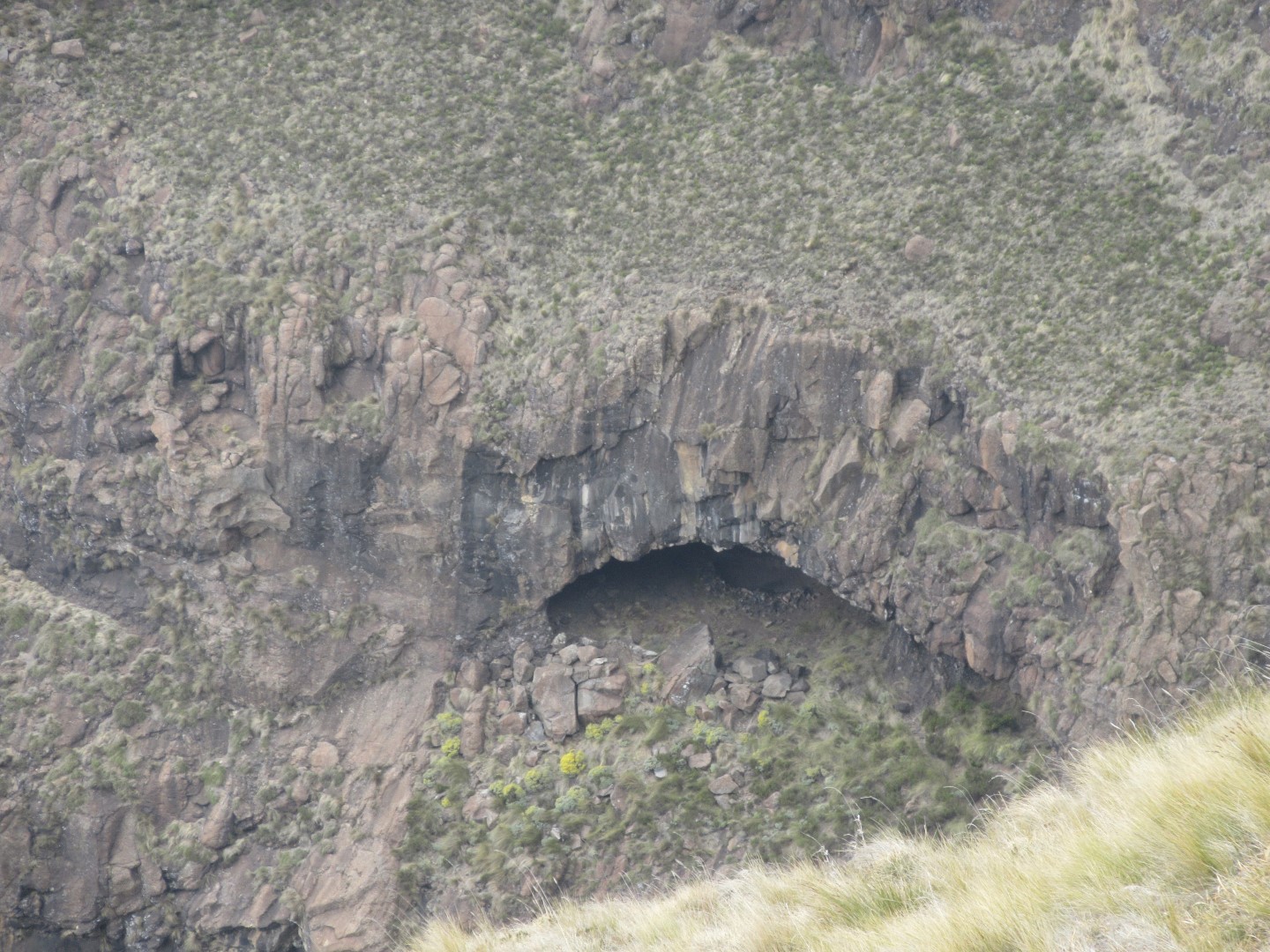
At roughly 2700m on the pass, on the south slopes, a large cave called Spare Rib Cave can be seen. A small shelter is visible from the gully - aim for this, and continue around the corner on the ledge till you are past this cave.

Spare Rib Cave as seen from Gypaetus Pass
Finding the pass from the top can be tricky in poor weather. However, in clear weather, the pass cuts back so far into the ridge that it is very visible from a distance. From the north (Popple side), aim for the obvious saddle right of Gypaetus Point, and upon reaching the escarpment edge, follow the cliff line right till the summit is reached.
⚠️ Mountain safety notice
Before starting any high Berg trek, log your group in the official EKZNW Mountain Rescue Register.
Download Rescue Register (PDF)Location map
Bannerman Pass Hike

Photos